Tusla’s Chief Regional Officer in the West and North West says their priority is to ensure that as many children in care as possible are placed with foster carers, and they’re always on the lookout for more people to fulfil that vital role.
The child and family agency’s annual report published this week shows that in 2024, there were 3,102 Child Protection and Welfare referrals in Donegal, with 50 children taken into care, 43 of them for the first time.
In total, there were 236 children in care in Donegal last year, 218 of them in foster care.
Paddy Martin says national increases have been reflected in Donegal……………….
Release in full –
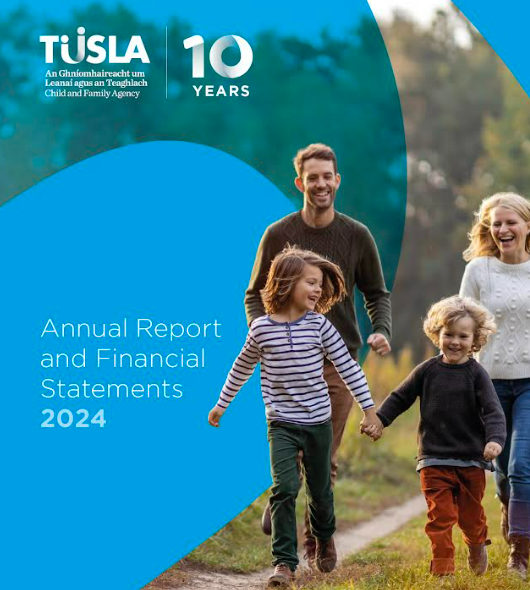
Tusla, Child and Family Agency has today published its Annual Report for 2024, marking a decade of service and progress since its establishment in 2014. The report reflects a year of continued growth in demand for services, a significant programme of reform, record staff recruitment, and major advances in digital transformation to better support children, families, frontline, and support staff.
In 2024, Tusla social workers in Donegal dealt with 3,102 child protection and welfare referrals. Nationally, there were 96,999 child protection and welfare referrals, a 5% increase on 2023, and a 121.5% increase on the number recorded in its first year (43,630 in 2014). This equates to more than 385 referrals every working day across Tusla’s six regions and 17 operational areas. Demand also increased across education, family support, residential care and special care, and services for Separated Children Seeking International Protection (SCSIP).
2024 figures for Donegal:
- 3,102 referrals were made to Child, Protection and Welfare Services
- 236 children were in care, 218 of whom in foster care
- 50 children were taken into care, 43 for the first time
- 4,224 children were referred to Family Support Services
- 714 cases were open to social work at the end of 2024
- 36 children were active on the Child Protection Notification System (CPNS)
- 145 foster carers on panel at end of 2024, including 6 newly approved carers
- 96 young people in aftercare
Commenting on the Annual Report, Tusla Chairperson Pat Rabbitte said: “By almost every measure, the demand for Tusla’s services continues to grow – but so too does the Agency’s capacity, resolve and sense of mission. A decade on from its creation, Tusla has undergone a transformation. While this journey remains incomplete, it has been marked by significant progress: the building of a national organisation, the strengthening of public trust, and a clearer vision for the future. Its greatest strength is its people – professionals who work every day with courage, empathy, and expertise to support and improve services for children and families in need.
“Tulsa’s Integrated Reform Programme is now at a pivotal point. This system-wide change is essential to delivering services that are more responsive, integrated, and accountable. Change is not easy, especially when it involves deep cultural change, but it is necessary. We are preparing the Agency to meet the increasingly complex challenges of today’s society. After ten years, Tusla has never been better equipped to deliver lasting change and better outcomes for children and families”, the Chairperson concluded.
The continued increase in referrals reflects both the rising pressures on families – including cost-of-living challenges, homelessness, domestic violence, addiction, and global displacement – as well as growing public and professional trust in Tusla as the Agency to whom concerns must be reported.
Paddy Martin, Regional Chief Officer West North-West for Tusla commented, “The demand we are seeing in Donegal, and indeed the entire country, reflects our constantly changing society. Children’s needs are changing, and so too must our response. The future demands faster coordination, deeper interagency collaboration, and a whole-of-government commitment to children’s safety and wellbeing. Child protection does not begin or end with Tusla, it is a shared responsibility that lives in our homes, schools, communities, and national policies.
“Our focus in 2024 has been on investing in the people and systems that drive change, from onboarding new staff, to rolling out digital case management tools that give frontline professionals a fuller picture of a child’s needs. In Donegal we have also placed an emphasis on the recruitment and retention of foster carers. We are making space for cultural change in our reform programme, building a workplace where staff feel valued, supported, and able to do their best work. Our mission remains constant: to protect children, support families, and help build a more inclusive, resilient, connected, and compassionate society”, he added.
In 2024, 1,258 new staff joined the Agency, including 143 new social workers through our most successful graduate campaign to date, supported by a separate targeted campaign that offered employment to all final-year social work students. A new Social Work Apprenticeship Programme created 113 new training places, broadening pathways into the profession.
Staff retention also improved, with a 93% overall rate (up from 91.1%) and social work retention rising to 91.5% from 87% in January 2024. These gains reflect sustained investment in staff wellbeing, professional development and a culture grounded in respect, accountability, and support.
Tusla advanced its Integrated Reform Programme in 2024, designed to improve how services are delivered to children and families and better support its workforce. A key feature is the Local Integrated Service Delivery (LISD) model, which ensures that every child receives the right service, from the right professional, in the right place, at the right time. Following comprehensive consultation with staff across the country, a model grounded in frontline insight and experience was designed, and the implementation plan was completed, with national rollout planned for early 2026.
Significant progress was also made in building a digital-first infrastructure to support service delivery. Key achievements in 2024 include:
- Launch of a new Data Management and Digital Transformation Strategy (2024–2026)
- Over 140,000 cases managed through the Tusla Case Management (TCM) system.
- More than 97,000 online referrals and 31,000 information exchanges processed through the Tusla Digital Portal
- New oversight dashboards and reports developed for transparency and quality improvement.
- 1.5 million historical adoption records digitised, improving access, compliance, and record management.
These innovations provide frontline teams with secure, integrated access to a child’s information, enabling better decisions, faster collaboration, and more effective interventions.
Demand remained high across foster care, mainstream residential care, and special care. A new dedicated National Fostering Recruitment Team approved 6 new foster carers across Donegal, and 245 nationally – a 21% increase on 2023 (173).
A further 47 beds were provided nationally in residential care, with the SCSIP service opening 20 new registered children’s centres, providing a total of 128 extra beds, to provide children with a safe place.
Tusla continues to face challenges, particularly in special care, where recruitment of specialist professionals working with young people with complex needs, remains problematic. Progress was made in 2024, as the Agency implemented a range of targeted initiatives to attract and retain staff. This included national and international recruitment campaigns.
In collaboration with the Department of Children, Disability, and Equality, Tusla has successfully introduced an enhanced staff grade – Special Care Worker – to strengthen the delivery of special care services. This strategic initiative is already showing positive outcomes: the opening of an additional special care bed marks a tangible expansion in capacity, and recruitment under the new grade is now underway, supporting the safe and effective care of some of the most vulnerable children in care.
The 2024 Annual Report reinforces that protecting children is a shared societal responsibility. It requires commitment not only from Tusla, but from every part of public life: education, housing, health, justice, and the community.
As the Agency enters its second decade, it does so with renewed purpose: transforming systems, supporting its people, and advocating for children’s rights at every level of society.
Nationally, 2024 in Numbers:
- 96,666 referrals to Child Protection and Welfare services (up 5% on 2023)
- 916 children were taken into care, 604 for the first time.
- 48,443 children referred to family support services.
- 478 commissioned organisations were funded to the tune of 181m.
- 121 Family Resource Centres supported and developed to include therapeutic hubs; all aligned with Community Therapy Ireland’s clinical governance standards.
- 8,000+ referrals screened by Tusla Education Support Service (TESS)— a 9% increase on 2023—with 7,575 children supported in the 2023–2024 school year.
- 53,000+ children supported through universal School Completion programmes (SCP), with 25,000+ through targeted interventions.
- 121 additional commissioned organisations received 36m through the SCP (18m more than in 2023)
- 5,823 children in care, 87% of whom were in foster care.
- 95% of children in care were in full-time education.
- 2,935 young people in aftercare
- 90% of those leaving care were in employment, training, or further education.
- 893 children supported by the SCSIP service (32% increase on 2023)
- Tusla ended 2024 with 22,839 cases open to social work.
- Tusla’s Children’s Services Regulation conducted 2,316 inspections of 4,045 early years registered services.
- Tusla’s Birth Information and Tracing (BIT) service received 9,337 information requests and processed 9,246, remaining within statutory timelines.
For the full range of “2024 In Numbers” and context, please see Annual Report 2024 at the following link: https://www.tusla.ie/