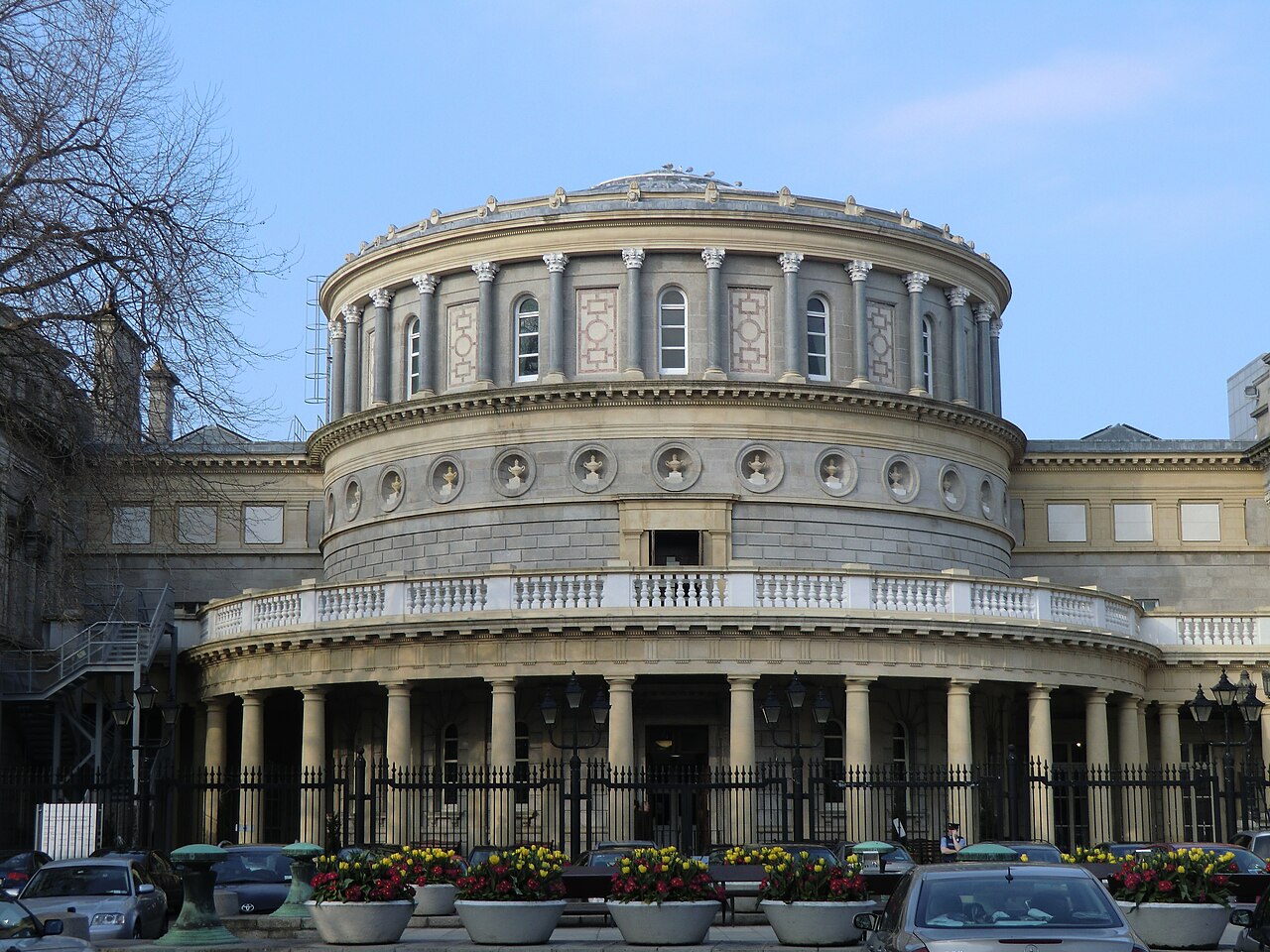
The National Library of Ireland have acquired letters from a Donegal family dating back to the 1860s.
The correspondence is mainly from Neal and Cornelius McMonagle who emigrated to the United States and their mother in the Gaeltacht region.
Crónán Ó Doibhlin, Head of Special Collections at the National Library of Ireland has given an insight into what it was like for families in Donegal during that period.
********
(Release in Full)
As families across Ireland exchange Christmas messages with loved ones near and far, the National Library of Ireland (NLI) is unveiling a new acquisition from an earlier era of long-distance correspondence. The McMonagle Family Letter Collection (1860–1903) offers a rare glimpse into the lives of Irish emigrants in the United States during the American Civil War, and the loved ones they left behind in Donegal.
The collection includes 25 letters sent to Cornelius McMonagle, also known as Con/Condy, from Boyoughter in Co. Donegal who emigrated to America in the late 1850s/early 1860s. The letters were written by his brother, friends and family members who had settled or served in America, alongside letters from Cornelius’s family back in Ireland. Notably for the time, the letters are in the English language despite Cornelius hailing from the Donegal Gaeltacht.
Significant Addition to NLI’s National Collection
The letters include correspondence from:
- Neal McMonagle, serving in the 52nd Pennsylvania Regiment, Company C, writing from South Carolina;
- Patrick Hughes, a brother-in-law originally from Kilgevin, Co. Galway, serving in the 58th Pennsylvania Regiment, Company H, stationed in Virginia and North Carolina;
- Soldiers Michael Burke (4th New Jersey Battery) and Michael Ford;
- And five letters from Cornelius’s family in Boyoughter, Donegal.
The collection also contains a formal letter sent to the McMonagle family from Lord Richard Lyons, British Minister to the United States, concerning Neal’s discharge from the Union Army.
Together, these letters reflect the voices of emigrants and their loved ones whose experiences are now preserved as part of Ireland’s memory at the NLI. They reveal familiar anxieties and affections; a mother longing for news, the joy of letters that confirm safety and love, and the daily pressures on farming families in Donegal in the later 19th century.
Window into 19th Century Life on the Frontline
The historical value of these letters is particularly evident in a letter dated 22 December 1863 in which soldier Neal McMonagle writes from Morris Island, South Carolina, describing the brutal winter conditions and his desperate desire to come home: “Do all you can to get me from hear [here],” he begs his brother Cornelius, describing exposure, hunger, and the realities of combat as Christmas approached. He writes:
“this is [a] miserable place, we don’t think nothing of seeing about twenty or thirty men lying dead on the beach here every tide comes in, we walk along side of them and passes them by and don’t let on ourselves that we see them until the tide washes them out again…”
Letter from Neal McMonagle, Morris Island [South Carolina], to his brother Cornelius McMonagle, describing conditions on the island and imploring him to do all he can “to get him from hear [here]”, 22 December 1863.
Equally moving is a letter from the family matriarch Anne McMonagle in Boyoughter, pleading with her sons in America to write home. Her writing demonstrates how distance and silence could consume families. She writes that she has not heard from them in “a long time” and asks for proof that they are alive and well:
“My dear Condy and Neal after a long absence we take up our pen in hands to inform you both about this country. It seems to us that you both are not living this long time or you have forgotten us all. Dear Condy It is a great wonder you have forgotten your mother in such a manner, you know very well that you were sent to that Country as well as any young man in this place…”
Letter from Anne McMonagle, Co. Donegal, to Neal and Cornelius McMonagle, asking that they write to her as she hasn’t heard from them in a long time, Pennsylvania, 27 August 1860.
Crónán Ó Doibhlin, Head of Special Collections at the National Library of Ireland, said:
“This collection of family letters is a remarkable surviving testament of the importance and precariousness of family connection during the mid-19th century. They document the immense challenges faced by Irish emigrants in The United States of America during the Civil War period, and describe separation, isolation, hardship and the horrors of war in detail. They also provide a real insight into the importance of literacy and the simple act of letter writing in this period for families who have been separated or dispersed.”
Conservation and Preservation at the NLI
The McMonagle Family Letter Collection documents the personal impact of emigration before mass telegraphy, when a single letter might have been the only link between continents and would have taken weeks to arrive by mailboat. Although well-preserved, the letters showed signs of wear from repeated opening and folding over 150 years. Conservation experts at the National Library of Ireland have cleaned the paper and used Japanese tissue to repair tears and losses. They are now safely stored and available to the public.
To view the collection at the National Library of Ireland online: https://bit.ly/McMonagle-