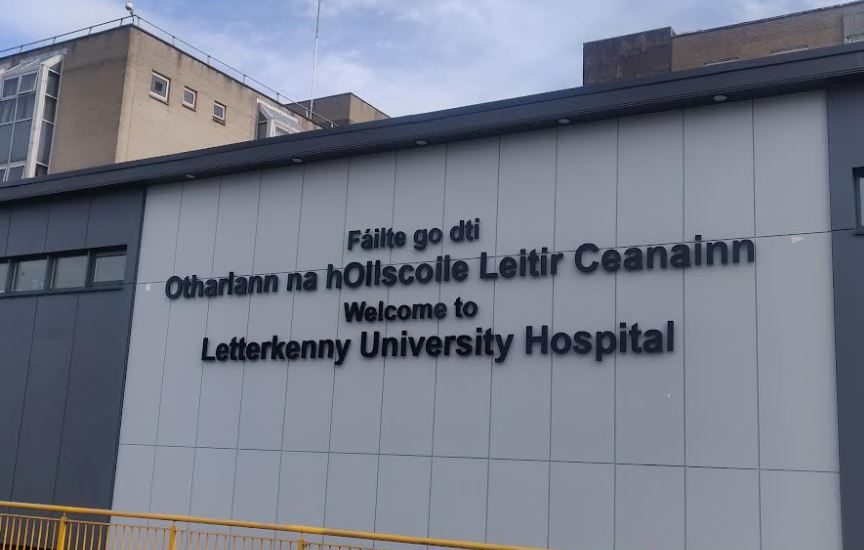
Letterkenny University Hospital has been named as the worst offender when it comes to wait times for people looking to begin their cancer treatment.
It’s according to The Journal Investigates.
Hospitals have a target to treat 90% of patients within 15 working days who are to start medications like chemotherapy and immunotherapy
Several protests were held outside of LUH earlier in the year in a call for improved services.
Maria Delaney, Editor with The Journal Investigates, says things have improved in Letterkenny, but more needs to be done:
A Journal Investigates report named Letterkenny University Hospital as the poorest performer in hitting the target that should see oncology patients beginning treatment within 15 working days of diagnosis.
A statement from the health service executive says some delays can be caused by waiting to ensure patients are fully recovered from pre-treatment surgery, and increased demand is also putting the system under pressure.
In the short term, four additional treatment bays have been put into use to increase capacity.
There are also long-term plans, including an ambulatory centre.
HSE Response:
The HSE West and North West region spans a wide geographic area that includes counties Donegal, Sligo, Leitrim, Mayo, Galway, and Roscommon. The cancer programme provides a comprehensive range of services to a population of 830,000 people. In alignment with the national hub-and-spoke model of care, complex cancer treatments are delivered at Galway University Hospital (GUH) while an extensive cancer care programme is provided closer to home at Letterkenny University Hospital (LUH), Sligo University Hospital, Mayo University Hospital, and Portiuncula University Hospital.
SACT (Systemic Anti-Cancer Therapy) is any drug treatment used to control or treat cancer.
Typically the aim is to initiate systemic therapy including chemotherapy within 4 – 8 weeks following surgery. However, there are many reasons why patients may have longer wait times for chemotherapy after surgery including, ensuring patients have recovered sufficiently and are fit for treatment. This is important to ensure patients respond to treatment in the best possible way. Earlier treatment post-surgery has not been shown to render better outcomes, and the priority is on the patient’s recovery post-surgery.
SACT activity is challenged due to increased demand. Increase in demand is multifactorial other than the predicted doubling of cancer incidence, including:
new drugs increasingly approved for use
development of immunotherapy and cellular therapies (CAR-T) and associated complexities
Increased tolerability of new drugs meaning patients with comorbidities can now be treated but are more complex to treat
With the development of more modern drugs, treatment cycles now last longer and often indefinitely
Increased duration and complexity of infusion times
Increased survival rates due to more effective treatments leading to increased requirement for more lines of subsequent treatment when cancer returns or progresses
Patient survival has improved, but this is associated with significant increase in demand for cancer services in general and cancer treatments, particularly the Day Wards.
Short-term plans to enhance capacity in LUH included adding 4 additional treatment bays as an extension to the day ward situated on the in-patient floor.
HSE West and North West is continuing to progress a capital plan across the region, which include proposals for significant investment at LUH. The hospital has identified the need for an ambulatory care hub to be provided on the Letterkenny campus. This is a stand-alone facility to provide ambulatory (non-inpatient) care. The hospital is currently working with HSE Capital & Estates to develop a business case for this development in line with the capital approvals protocols. The Ambulatory Centre will need to provide additional functionality and capacity to meet the needs of County Donegal in the form of additional ambulatory cancer capacity (including much larger Haematology Oncology Day Unit, new Symptomatic Breast Cancer Unit,& Ambulatory Urology Facility and additional diagnostic and surgical facilities. Work has already commenced on the clinical health planning study for LUH and this standalone facility will align with the strategic vision of the follow on Development Control Plan (DCP) for the campus. The hospital will be making every effort to secure the funding and progress this significant capital development on the LUH campus in as expedient a manner as possible.