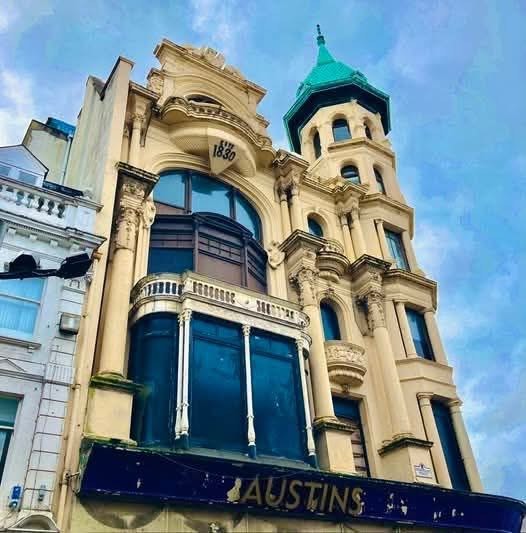
Conservation work at the historic Austins building in Derry City is set to begin next year.
The Inner City Trust says it will be the beginning of a bigger project to revitalise the site.
***************************
Full statement –
The Inner City Trust is proud to announce that exploratory and conservation work at the historic
Austins building in Derry will commence in early January 2026, running for
approximately six to eight weeks.
This initial phase of work has been made possible through
generous support of £459,000 from The National Lottery Heritage Fund.
The revised start date, while later than originally hoped, has been scheduled to begin after the busy
Halloween and Christmas trading periods so neighbouring businesses can benefit fully from the city’s
key retail seasons. The Trust’s long-term vision is to see a revitalised Austins act as a catalyst for
renewed footfall and commercial activity throughout The Diamond, strengthening the local retail
ecosystem, enhancing visitor appeal, and re-establishing this area as a vibrant economic and cultural
hub within Derry.
A specialist heritage architecture team from Mullarkey Pedersen Architects, led by Karl Pedersen,
will carry out this first phase of conservation work. The programme will include the development of
a comprehensive Conservation Management Plan and detailed investigatory work to assess the
building’s condition. These findings will guide the scope and scale of the full restoration phase,
planned to begin later in 2026.
Venerable Robert Miller FRSA, Chair of the Inner City Trust, said:
“This is the beginning of a new chapter for Austins, transforming a much-loved landmark into a place
of pride, energy and opportunity once more. By tackling urban blight and drawing people back into
the heart of the city, this regeneration will spark fresh life in local businesses, creating lasting
benefits for our whole community.”
Karl Pedersen, Lead Heritage Architect, added:
“This phase is critical, not only for sensitively restoring Austins’ historic fabric, but also for
understanding the structural interventions needed to ensure its long-term integrity.