Latest figures from Pobal show there were 2,185 children on waiting lists for childcare places in Donegal at the end of last year, with childcare costing just under €180 per week for one child in full time care.
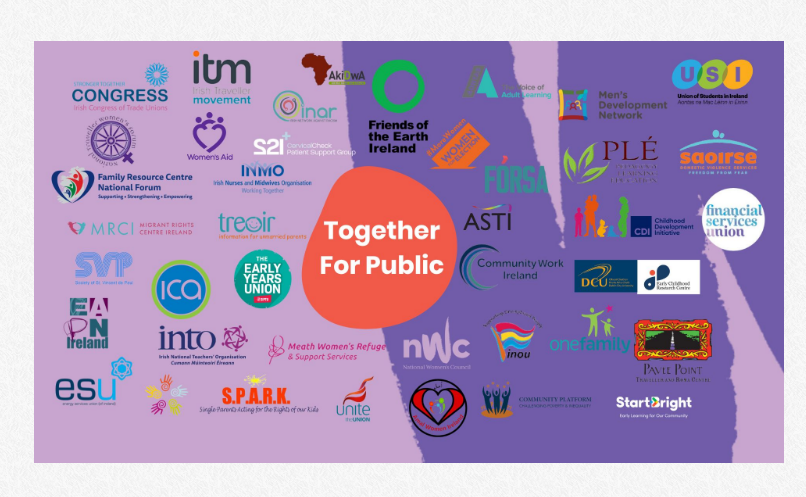
The National Women’s Council is now urging Government to use Budget 2026 to deliver a transformative shift in Ireland’s early childhood education and care system, a call supported by the Together for Public Alliance, encompassing over 40 civil society organisations.
In a statement this afternoon, the NWC says even when state subsidies are taken into account, these fees are completely unsustainable for countless families, and the lack of available places is acting as a major barrier for women to return to work and for their full participation in all aspects of society.
At present, they say, Ireland ranks in the top 3 countries in Europe for childcare costs, with more than 50,000 children under the age of 4 on waiting lists for places across the country; and thousands more on waiting lists for after-school/school-age childcare.
NWC Director Orla O’Connor says t6he Government has promised to tackle the crisis and must now deliver.
She concludes Budget 2026 is a unique opportunity to invest in building a public system of early childhood education and care that is affordable for parents, values educators, and supports women and families.
Find out more about Together for Public: https://www.nwci.ie/discover/
Read NWC’s Pre Budget Submission: https://www.nwci.
********************
Release in full –
Childcare costs in Donegal on average €179.56 per week with 2,185 children on waiting lists
NWC calls for rollout of public childcare system in Budget 2026
Press Release, 08/09/2025, for immediate release
In Donegal, childcare costs are on average €179.56 per week for one child in full-time care and 2,185 children are on waiting lists, according to latest Pobal figures (2023/24).
Even when the modest State subsidies are taken into account, these fees are completely unsustainable for countless families. In addition, the lack of available places is acting as a major barrier for women to return to work and for their full participation in all aspects of society.
Ireland ranks in the top 3 countries in Europe for childcare costs. Country wide, there are more than 50,000 children under the age of 4 on waiting lists for places across the country; and thousands more on waiting lists for after-school/school-age childcare.
In last year’s Programme for Government, the government promised to cap childcare fees at €200 per month and to begin providing State-run services in communities facing the greatest childcare gaps. More than a year on, families, children and educators are still waiting and meaningful progress is yet to be made.
NWC is now urging Government to use Budget 2026 – the first budget from the new Government – to deliver a transformative shift in Ireland’s early childhood education and care system. This call is supported by over 40 civil society organisations who have come together in the Together for Public Alliance to campaign for a public system of early childhood education and care.
Orla O’Connor, Director of The National Women’s Council said;
“Families across the country are under enormous pressure, paying some of the highest childcare costs in Europe. Many are struggling to even secure a place. Our broken childcare system particularly affects women who are forced to make difficult decisions about their careers and lives. The Government has promised to tackle the crisis and must now deliver. Budget 2026 is a unique opportunity to invest in building a public system of early childhood education and care that is affordable for parents, values educators, and supports women and families. We want to see a system where every child who needs a place has access to one, just as children do in the primary school system.”
Donal Swan, Women’s Equality Co-ordinator at the National Women’s Council, said:
“Early childhood education and care should be treated as essential public infrastructure, not a luxury only for those who can afford it. The only way Ireland can meet its own targets and come in line with other EU countries is by moving away from a private, market-led model and building a truly public system. Recent media reports of crèche buildings lying idle in new housing estates show a unique opportunity for the State to step in, take these facilities on, and begin delivering childcare directly in the communities that need it most.”
Specifically, NWC is calling on the Government to invest an additional €300m to:
– Reduce costs for families
– Expand targeted supports and funding schemes such as Equal Start and AIM
– Provide ring-fenced funding for educators’ wages.
Crucially, €30m must be allocated to begin the rollout of publicly delivered childcare services, starting with 50 pilot services in marginalised and underserved communities.