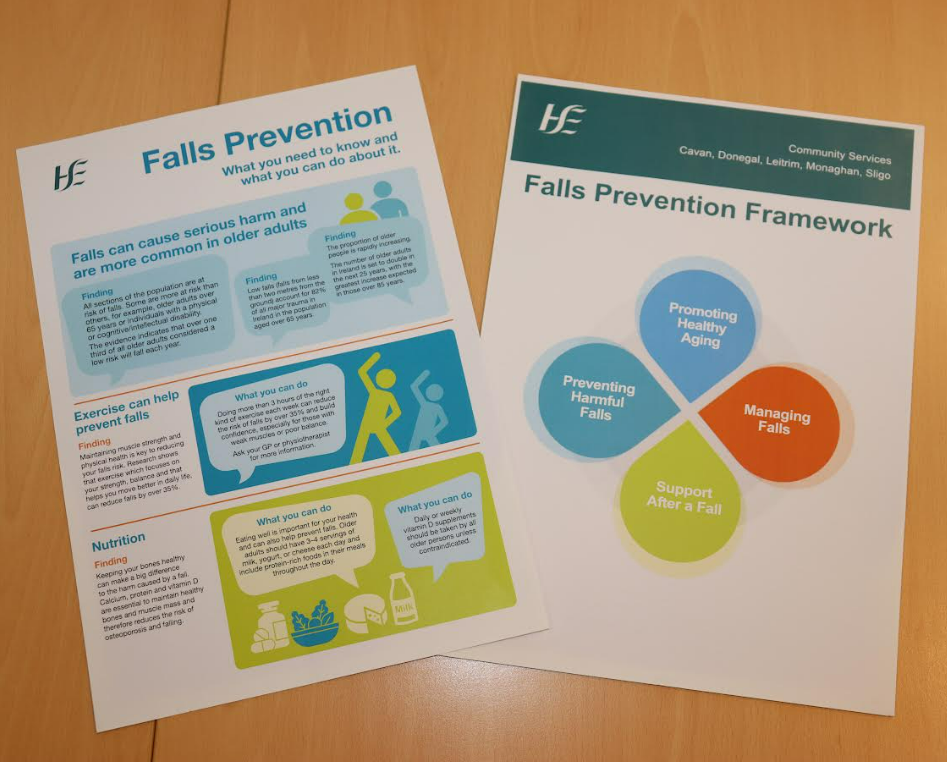
HSE West and North West has introduced a new falls prevention framework, accompanied with information leaflets ; one for the general public and another for clinicians.
The framework is based on the findings of research that shows 82% of major trauma in older adults in Ireland are attributable to low falls, and 70% of these accidents occur in the home.
Physiotherapist Edel Brennan is a clinical coordinator specialising in falls.
She says most recent statistics from Letterkenny University Hospital show the impact falls can have locally, and that’s why the HSE embarked on this process..……
You can hear a longer version of the discussion with Edel here………..
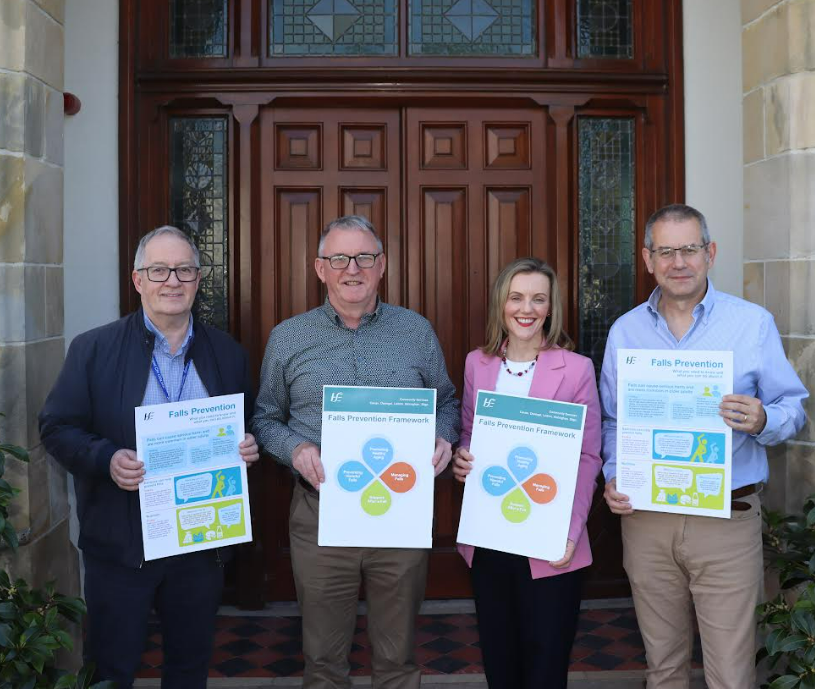
L to R: Padraig McLoone, Acting Head of Services QSSI, CDLMS, Dermot Monaghan, IHA Manager, Donegal, Edel Brennan, Clinical Coordinator, Falls and Bone Health, CDLMS, Colin McCann, Projects Manager QSSI, CDLMS
Release in full –
HSE Falls Prevention Framework Launch
A new falls prevention framework has been launched by HSE West and North West. The framework document presents the best available national and international evidence to help us prevent falls – the main cause of major trauma to our older population. The document has been developed by dedicated healthcare professionals across the region, working in community, residential and acute settings.
Dermot Monaghan, Donegal Integrated Healthcare Area Manager, formally launched the Falls Prevention Framework developed by HSE staff across the North West and North East.
Falls are the second largest cause of unintentional injury-related deaths worldwide Falls are more common among older adults, with 30-40% of those over 65 falling each year. 82% of major trauma in older adults in Ireland are attributable to low falls, and 70% of these accidents occur in the home .
A history of falls significantly increases the risk of future falls; for older adults, a fall, whether or not it results in serious injury, may represent a life-changing event that carries implications for their perceived health and behaviour. Fear of falling leads to reduced physical activity, both indoors and outdoors, which contributes to declining physical function, increased frailty, and a higher likelihood of fractures and institutional care.
Recognising the multifactorial nature of falls prevention, a steering group and six working groups were established in late 2022. The six working groups reviewed the research in relation to: Bone Health, Strength & Exercise; Medication Review; Residential Services & Continence; Environment & Structural Issues; Education & Awareness and Equipment & Technology.
Each specialist working group developed key findings and recommendations in relation to promoting healthy aging; preventing falls; managing falls and supporting people after a fall. All of the findings and recommendations from these working groups are now presented in the framework document which will be an indispensable resource for clinicians, not just locally, but all across Ireland and beyond.
Findings from the Falls Prevention framework show that:
- Home was the main location for major trauma injury for older adults, with almost double the proportion (70%) of accidents happening in the home compared to those aged under-65 years (36%) (25).
- Care home residents are three times more likely to fall than older adults living in their own homes and therefore all residents should be considered at high risk of falls.
- Many falls can be prevented. Fall and injury prevention needs multidisciplinary team effort that requires leadership support.
- Regular physical activity can help older persons improve physical function and balance, thereby preventing harmful falls and fall-related injuries (45). Specifically, multi-component exercise (that includes balance, functional and resistance exercise) has been proven to reduce the rate of falls by 35%.
- The cost of treating falls in our acute hospitals in the north west was an estimated €40.5 to €46.9 million in 2023. This does not capture the economic burden associated with falls in the community setting that do not require hospital admission. The cost of fall related injuries in older persons in Ireland is expected to reach over €2 billion by 2030 .
- Falls prevention knowledge and strategies helps people to live well and independently at home by increasing their knowledge and thereby reducing the risks associated with falls such as reduced muscle strength, poor balance and safety hazards in the home.
Research indicates that falling is not the problem if you have enough strength and balance to get back up again. FaME, a Falls Management Exercise programme which improves strength and balance has been proven to reduce falls by 54%. A recent class participant who attended the FaME programme locally stated, “Being stronger and steadier on my feet has given me the confidence to go out on my own and negotiate everyday life such as getting on the bus to visit my daughter and the grandchildren.”
A falls prevention information leaflet for members of the public was also developed to help people learn about harm from falls, the modifiable risk factors and what they can do to manage them.
https://www.hse.ie/eng/services/publications/falls-prevention-public-information-leaflet.pdf
Dermot Monaghan expressed his thanks to all of the people involved in the development of the framework, stating “I am looking forward to working with colleagues in other IHA areas to plan the implementation of this important initiative, aimed at reducing harm from falls”.
The framework document can be accessed on the following link.
https://www.hse.ie/eng/services/publications/falls-prevention-framework.pdf