A group representing key banking, insurance, legal and engineering interests is today calling for urgent revisions to the proposed IS:465 standard for Defective Concrete.
The DCB Stakeholder Forum, which is chaired by Insurance Ireland, is warning that failure to address critical issues could prolong uncertainty for homeowners and destabilise the property market in affected areas.
The submission, made to the National Standards Authority of Ireland, argues that the draft standard does not fully reflect current scientific understanding of the causes of concrete degradation.
The group is also calling for a significant reduction in acceptable sulfur thresholds, based on emerging research, to ensure that properties at real risk of deterioration are properly identified and prioritised for remediation.
However, the focus group stresses that the implications go far beyond technical standards.
The statement says the absence of clear, scientifically backed thresholds for acceptable levels of defective materials is creating major challenges for the conveyancing process, mortgage lending, and insurance underwriting.
They conclude without a definitive standard, there is no consistent basis for determining whether a property is structurally sound.
The submission also raises concerns about inconsistencies in remediation decisions, warning that the current draft leaves too much discretion to individual engineers, potentially leading to unequal outcomes for homeowners.
*******************
Statement in full –
Industry Coalition Urges Critical Changes to Concrete Standards to Protect Irish Homeowners and Property Market in face of growing DCB crisis.
A multiparty stakeholder group, chaired by Insurance Ireland representing key banking, insurance, legal and engineering interests has issued a strong call for urgent revisions to the proposed IS:465 standard, warning that failure to address critical issues could prolong uncertainty for homeowners and destabilise the property market in affected areas.
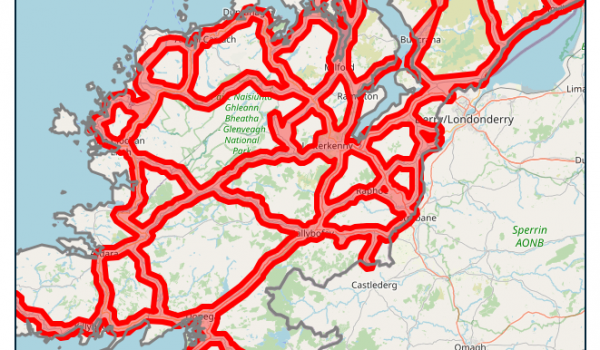
The submission, made to the National Standards Authority of Ireland (NSAI), comes from the DCB Stakeholder Forum, which includes representatives from major financial institutions, insurers, and professional bodies. The group has engaged extensively on issues arising from defective concrete blocks (DCB), particularly in counties such as Donegal.
Central to the submission is a clear warning that the draft standard does not fully reflect current scientific understanding of the causes of concrete degradation. The Forum highlights that internal sulfate attack (ISA), linked to pyrite and pyrrhotite, is the proven cause of damage—not mica or freeze-thaw mechanisms as referenced in parts of the draft.
The group is also calling for a significant reduction in acceptable sulfur thresholds, based on emerging research, to ensure that properties at real risk of deterioration are properly identified and prioritised for remediation.
However, the Forum stresses that the implications go far beyond technical standards.
The absence of clear, scientifically backed thresholds for acceptable levels of defective materials is creating major challenges for the conveyancing process, mortgage lending, and insurance underwriting. Engineers’ reports currently identify varying levels of defective materials, but without a definitive standard, there is no consistent basis for determining whether a property is structurally sound.
This uncertainty is having a direct impact on homeowners and prospective buyers, particularly those who purchased properties after January 2020 and are excluded from the State remediation scheme. Without access to grant support and in the absence of clear guidance, these homeowners face significant long-term financial risk.
From an insurance perspective, the Forum notes that underwriters require clear and conclusive data to assess risk. While remediated homes can be treated as standard once certified, properties pre and post remediation remain difficult to insure due to the lack of clarity.
Similarly, the lack of a robust classification framework is affecting the ability to confirm “good and marketable title” during conveyancing. The Forum is calling for the introduction of a scientifically grounded categorisation system—similar to the UK’s Mundic scheme—to establish minimum safe levels of defective materials below which deterioration is not expected.
The submission also raises concerns about inconsistencies in remediation decisions, warning that the current draft leaves too much discretion to individual engineers, potentially leading to unequal outcomes for homeowners. It recommends clearer guidance, along with the potential introduction of accredited panels of qualified professionals to support homeowners through the process.
“This is a critical opportunity to ensure that IS:465 is firmly grounded in scientific evidence and provides absolute clarity for homeowners, lenders, insurers and legal professionals. Without this, uncertainty will persist and confidence in the housing market—particularly in counties like Donegal—will remain severely compromised,” said the Banking and Insurance DCB Focus Group.
The Forum is urging the NSAI to work closely with stakeholders to ensure the final standard delivers clarity, consistency and confidence—protecting homeowners while restoring trust in the property market.