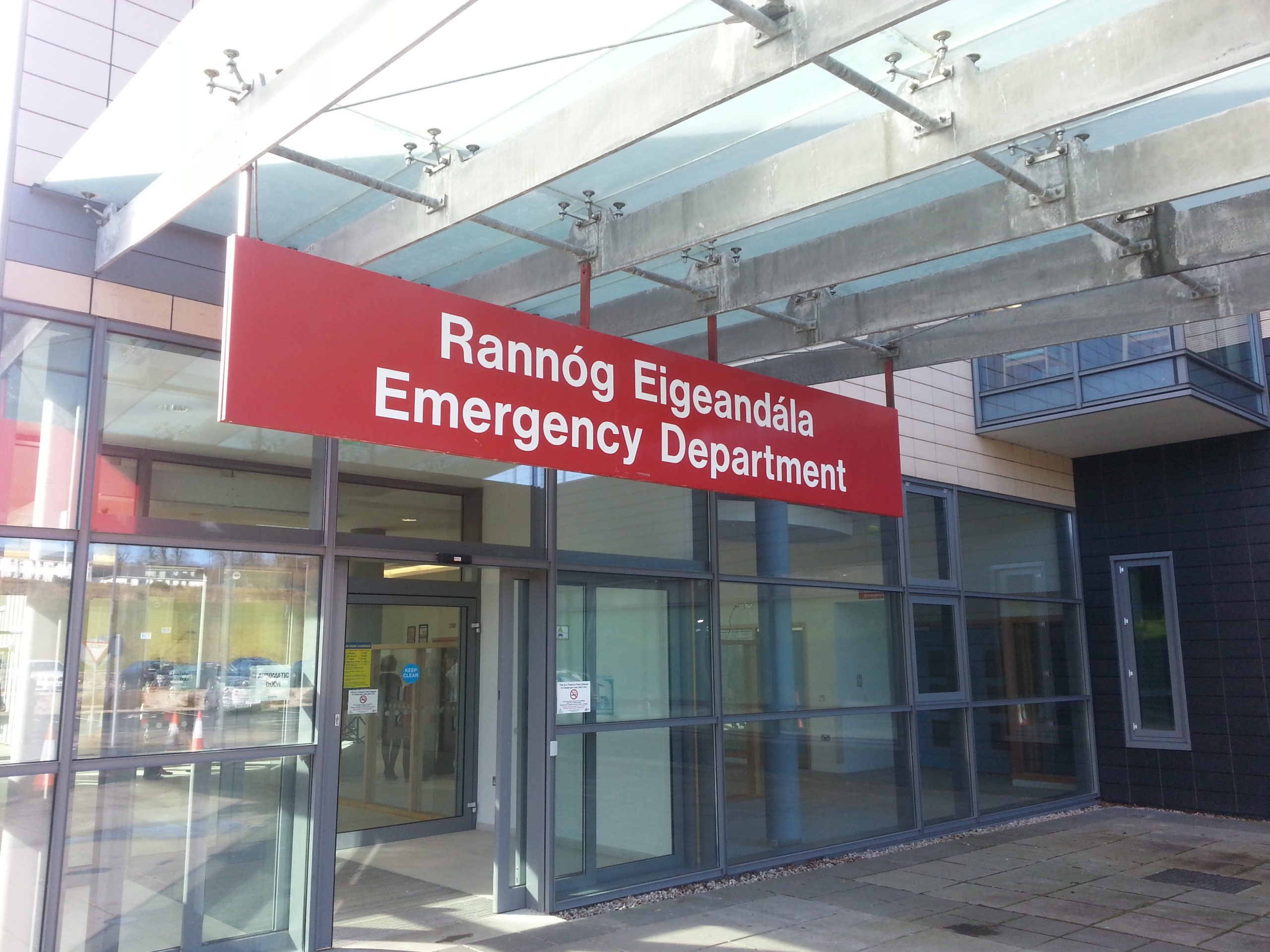
The HSE says the Emergency Department at Letterkenny University Hospital is extremely busy this afternoon, with high numbers of people attending the department who need to be admitted to hospital for ongoing treatment.
At present, all escalation and surge areas are at capacity, and people are being advised to consider alternatives such as GPs, GP out of hours services and pharmacists.
Management say yesterday, 175 people attended the Emergency Department, and as of this afternoon, there were 17 patients on trolleys in the Emergency Department awaiting admission.
The hospital is implementing all possible measures to improve patient flow and reduce delays in the ED, and is asking the public to consider all available healthcare options before attending. Everyone who presents will be treated, with priority given to those who are seriously ill or injured.
Management say all available beds in the hospital are in use, and patients are facing long waiting times to be admitted from the Emergency Department to a bed on a ward. Every effort is being made to discharge patients who are ready to go home so that beds become available for patients who need to be admitted, at the earliest opportunity.
As a result, they say some elective surgeries may have to be deferred, with urgent and time-sensitive procedures being prioritised. Patients will be contacted directly if their procedure is being postponed.
Statement in full –
Letterkenny University Hospital is extremely busy with long wait times in the Emergency Department
23 July 2026
The Emergency Department at Letterkenny University Hospital is extremely busy with high numbers of people attending the department who need to be admitted to hospital for ongoing treatment.
Yesterday 175 people attended the Emergency Department. As of this afternoon, there are 17 patients on trolleys in the Emergency Department awaiting admission and all escalation and surge areas are at capacity.
The hospital is implementing all possible measures to improve patient flow and reduce delays in the Emergency Department and is asking the public to consider all available healthcare options before attending. Everyone who presents will be treated, with priority given to those who are seriously ill or injured. Patients who do not require urgent care unfortunately may experience longer waiting times.
All available beds in the hospital are in use. Patients are facing long waiting times to be admitted from the Emergency Department to a bed on a ward. Every effort is being made to discharge patients who are ready to go home so that beds will become available for patients who need to be admitted, at the earliest opportunity.
Due to these ongoing pressures and the lack of bed capacity, we are reviewing some elective surgeries which may have to be deferred. Urgent and time-sensitive procedures are being prioritised. Patients will contacted directly if their procedure is being postponed.
The hospital acknowledges that these delays are very difficult for patients and their families and apologises for the inconvenience and distress these delays cause.
We request that people only attend the Emergency Department at the hospital if it is an emergency situation. We ask that people attend their GP or out of hours service in the first instance if at all possible.
The hospital is committed to treating everyone who presents at the Emergency Department; people who are seriously injured or ill are assessed and treated as a priority and those who do not require urgent care may be waiting longer.
Community pharmacists provide expert advice and over-the-counter treatments for a wide range of minor illnesses. In addition to this expert advice, a new service is available which allows pharmacists to supply prescription-only medication without the need to see a GP. The following common conditions can be treated under the Common Conditions Service; allergic rhinitis, cold sores, conjunctivitis, impetigo, oral thrush, shingles, cystitis (uncomplicated urinary tract infection), vaginal thrush. Information about the scheme is available on the HSE website here.