A Midlands North West MEP is calling for a full cumulative impact assessment of all EU and UK trade agreements affecting beef and sheepmeat, warning that current policy is failing to measure the real pressure facing Irish and European farmers.
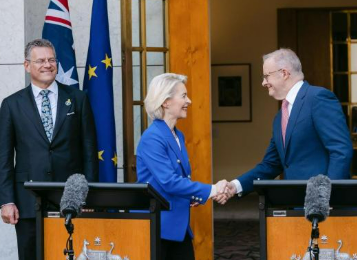
Ciaran Mullooly was speaking after a new trade deal was signed with Australia this week by EU Commission President Ursula Van Der Leyen.
He says before any deals are accepted, he wants an assessment on what effect all deals are having on the market as a whole, but also on farmers on the ground.
Mr Mullooly says all deals have a cumulative4 effect, and that needs to be measured………….
Statement in full –
Mullooly calls for urgent EU assessment of combined trade deal impact on farmers – “We can’t sign up to Australian proposal until clarity on UK and EU deals with Oz are provided
Midlands-North-West MEP Ciaran Mullooly has called on the EU President Ursula von der Leyen to immediately commission a full cumulative impact assessment of all EU and UK trade agreements affecting beef and sheepmeat, warning that current policy is failing to measure the real pressure facing Irish and European farmers.
The call comes amid growing concern that successive trade deals are being assessed in isolation, while their combined effect is being felt on farms across Ireland.
“Right now, the Commission is looking at each trade deal one by one, but farmers are living with the combined reality,” Mullooly said.
“Whether it’s Mercosur, Australia, New Zealand or other agreements, the impact is not separate – it is cumulative. And that cumulative effect is not being properly measured.”
Mullooly said that while individual agreements are often presented as limited in scale, the overall volume of additional access to the EU market is steadily increasing.
“If it is considered significant to allow tens of thousands of tonnes of beef into the EU under one agreement, then it makes no sense to approve further volumes under additional deals without assessing the total impact. That is not credible policy-making.”
He warned that the issue is not just about volume, but about price pressure and competitiveness.
“This is not just about how much beef comes in – it’s about what happens to prices. Lower tariff access makes imports more competitive, and that has a direct knock-on effect on farmgate returns.”
Mullooly also highlighted the growing risk from developments in the United Kingdom, Ireland’s largest export market.
“The UK is now opening its market further to countries like Australia and New Zealand. If Irish beef loses even a small share there, it doesn’t disappear – it comes back into the EU market, increasing competition at the same time as more imports are coming in from elsewhere. That creates a double squeeze on Irish farmers – pressure from the UK market and pressure within the EU market at the same time.”
He said that Ireland is particularly exposed due to its reliance on exports and the concentration of those exports in the UK and EU markets.
“We are not dealing with an abstract issue. Ireland exports the vast majority of its beef, and our sector is highly dependent on a small number of markets. That makes us especially vulnerable when policy decisions fail to account for the full picture.”
Mullooly also pointed to recent data showing that while export values remain strong, Irish beef export volumes are below previous levels.
“That tells its own story. The sector is not expanding in volume terms, yet we continue to add pressure through trade concessions without fully understanding the consequences.”
He is now calling for a reset in how trade impacts are assessed.
“We need a comprehensive, cumulative and dynamic assessment that looks at all trade agreements together, including their impact on prices, market share, and farm incomes. That assessment must also recognise the specific exposure of countries like Ireland, where the effects are far more significant than EU averages would suggest.”
Mullooly confirmed that he is writing to both the Trade Commissioner and the Agriculture Commissioner seeking the immediate commissioning of such a study.
“Before any further concessions are made in beef or sheepmeat, we need a clear, honest and complete assessment of the combined impact of existing and proposed agreements. Farmers cannot be expected to carry the cost of a policy that is not even measuring its own consequences.”